


College Tilla Lake faces ecological crisis as dead fish, foul stench, and missing migratory birds spark public outrage. Environmental groups blame unplanned Smart City redevelopment. Authorities remain silent as concerns rise over water contamination and ecosystem collapse.
Agartala’s newly redeveloped College Tilla Lake, once celebrated as an ecological hotspot and a natural sanctuary for migratory birds, has fallen into controversy as residents and environmental groups raise alarms over alleged ecological mismanagement under the Smart City project.
The situation escalated on Monday after visitors reported spotting large numbers of dead fish floating across the lake’s surface, accompanied by an overpowering foul smell spreading throughout the area.
According to eyewitnesses, the distressing scenes were first noticed early in the morning by walkers and park-goers who frequent the renovated lakefront. Several corners of the water body reportedly had clusters of dead fish, some already in the early stages of decomposition. The incident immediately sparked concerns over water stagnation, contamination, and possible disruption of the lake’s ecological balance following redevelopment activities.
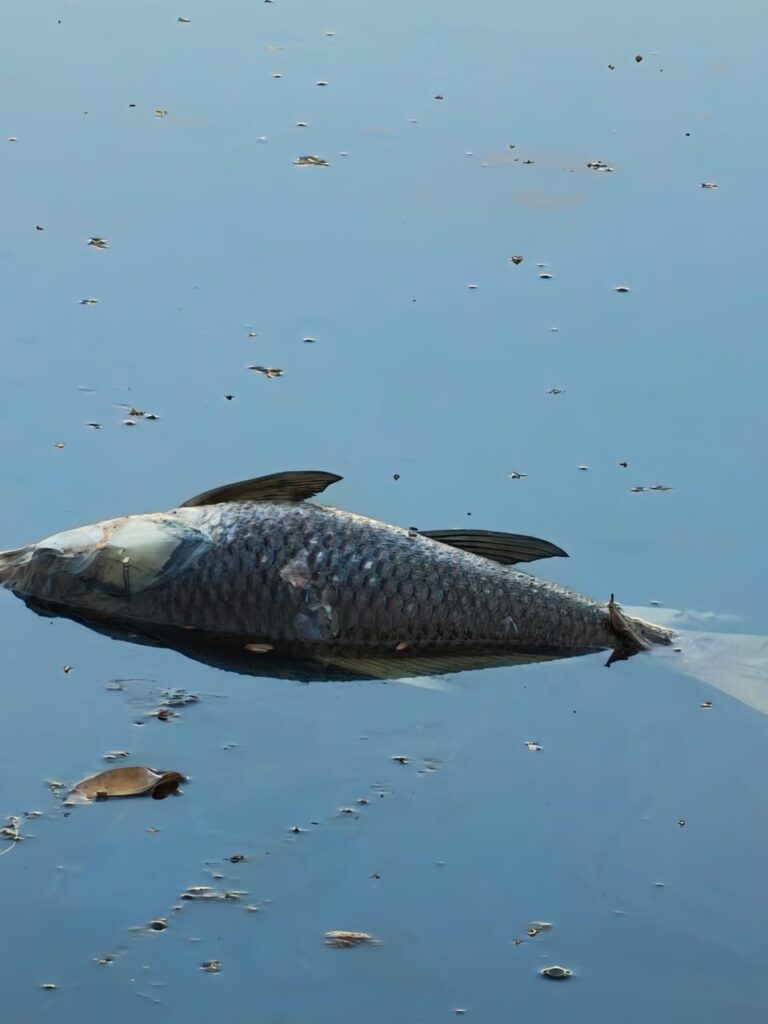
Local residents claimed that the renovation, carried out under the Smart City initiative, has led to significant changes in water circulation patterns. “The water has become almost stagnant since the redevelopment work,” a regular visitor said. “There is no proper inflow or outflow, and the filtration system, if any, seems ineffective. Fish cannot survive in such suffocating conditions.”
Environmental activists also alleged that the redevelopment work ignored key ecological safeguards. They argued that the lake’s natural ecosystem, which supported a wide diversity of aquatic life and bird species, has been severely compromised due to the implementation of concrete structures and inadequate water treatment mechanisms.
Fears Grow Over Ecological Collapse
Experts familiar with the lake’s ecological history said that College Tilla Lake has always served as an essential biodiversity zone, especially during winter months. The water body has traditionally attracted numerous species of migratory birds, transforming it into a seasonal haven for birdwatchers, wildlife photographers, and ornithology enthusiasts.
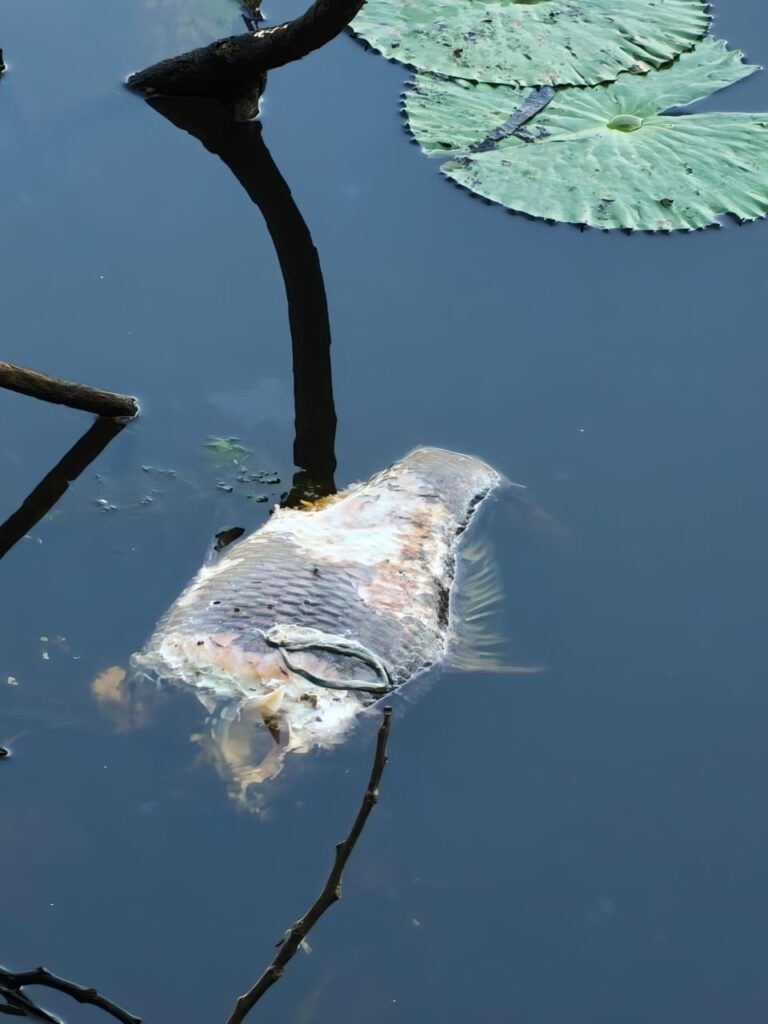
However, this year, residents say the lake has not witnessed the arrival of a single migratory bird so far—a highly unusual occurrence that has intensified fears of ecological degradation. Bird lovers who visited the area in anticipation of winter roosting were left disappointed and concerned.
“The absence of migratory birds is not a coincidence,” said an ornithology enthusiast who has been documenting bird activity around the lake for several years. “Birds are highly sensitive to environmental changes. If the water quality has deteriorated or if the food chain has been disrupted, they will simply avoid the area. The fish deaths confirm that something is fundamentally wrong.”
Public Backlash Mounts
Photos and videos circulating on social media, showing dead fish and murky water, have triggered widespread criticism from environmental groups, academics, students, and concerned citizens. Many have accused the authorities of prioritizing beautification over ecological preservation, arguing that redevelopment must be sustainable rather than cosmetic.
Opposition leaders and activists have demanded immediate intervention by environmental experts, calling for a comprehensive assessment of the lake’s water quality, oxygen levels, and overall ecological health. Several users on social media have also questioned the transparency of the Smart City project, urging authorities to release detailed reports on the redevelopment process.
“This is not just a case of fish dying,” said a member of a local environmental group. “This is a warning sign of complete ecosystem collapse. If corrective actions are not taken immediately, the lake may lose its ecological value permanently.”
Authorities Maintain Silence
Attempts to contact officials from the Fisheries Department and the Smart City Mission reportedly proved unsuccessful. When approached by reporters, officials declined to comment, stating that no official statement could be made at the moment.
This silence has further fueled public frustration, with many demanding accountability and urgent remedial steps. Citizens have urged the government to deploy scientific teams to investigate possible causes, including oxygen depletion, chemical contamination, eutrophication, or structural alterations affecting natural water flow.
Call for Immediate Restoration Measures
Environmental experts emphasize that lakes undergoing redevelopment must be carefully monitored, especially during early stages, to prevent ecological imbalance. They have recommended installing aerators, restoring water circulation channels, removing pollutants, and reintroducing biological diversity through scientific fish stocking and habitat restoration.
| Also Read: THRC probes illegal construction at College Tilla Lake in Agartala |
As protests gain momentum and concerns grow, citizens await action from authorities to revive the health of College Tilla Lake and prevent further environmental damage.





