
Tripura records 332% growth in flower cultivation over seven years, Agriculture Minister Ratan Lal Nath announces while inaugurating the Centre of Floriculture and Landscaping in Udaipur, highlighting rising farmer income, infrastructure expansion, and high-tech floriculture initiatives.
Agriculture and Farmers’ Welfare Minister Ratan Lal Nath on Saturday announced a remarkable 332 percent increase in flower cultivation across Tripura over the past seven years, underscoring the state’s growing potential in commercial floriculture.
The minister made the statement after inaugurating the Centre of Floriculture and Landscaping at Gokulpur in Udaipur under Gomati district. The new facility is expected to boost research, training, and production support for flower growers across the state.
Major Expansion Since 2018-19
Addressing officials and farmers, Nath highlighted that the area under traditional floriculture has expanded significantly since the 2018-19 financial year. He stated that cultivation areas of marigold, gladiolus, and rose have grown by 60 percent during the period. At the same time, the total production area of local flowers has increased by an impressive 332 percent.
In addition to traditional varieties, high-tech floriculture has also gained momentum. According to the minister, the area under protected and advanced cultivation methods has surged by 124 percent, indicating farmers’ growing interest in modern techniques and high-value crops.
Favorable Climate and Growing Demand
Nath emphasized that Tripura’s soil quality, balanced rainfall, and subtropical climate make it highly suitable for flower cultivation. He noted that traditional flowers such as marigold, gladiolus, and rose continue to dominate local markets due to steady demand for religious, cultural, and decorative purposes.
Meanwhile, high-value flowers like anthurium, orchid, and gerbera are increasingly being grown under protected conditions such as polyhouses and greenhouses. These flowers fetch better prices in urban and commercial markets, contributing to higher income for farmers.
Rising Farmer Income
The minister revealed that farmers cultivating flowers on just 200 square metres of land are earning average monthly profits exceeding Rs 10,000. He described floriculture as a viable and profitable alternative to conventional farming, particularly for small and marginal farmers seeking better returns.
“Growers are receiving remunerative prices in the local market, and the government is committed to strengthening marketing linkages,” Nath said, adding that improved infrastructure and training support have encouraged more farmers to take up flower cultivation.
Infrastructure Boost
To support the expanding sector, the government has invested in critical infrastructure. A 400 square metre arcadium and a 400 square metre hardening centre have been constructed at Badharghat Garden to facilitate better plant conditioning and storage.
The newly inaugurated Centre of Floriculture and Landscaping at Gokulpur has been developed at a cost of Rs 4.50 crore with assistance from the Public Works Department. The centre will serve as a hub for training, technology transfer, and seedling distribution.
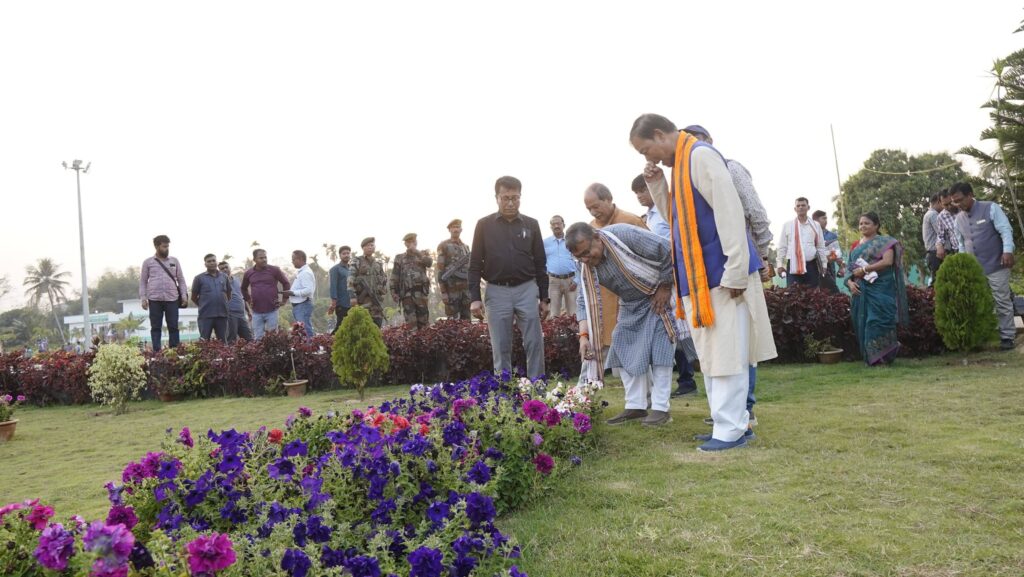
Additionally, a Centre of Excellence on Flowers is being developed at Lembucherra over approximately 65 kani of land under a joint initiative of the Central and state governments. This advanced facility will focus on the cultivation of orchids, anthurium, gerbera, rose, chrysanthemum, and leafy ornamental plants. It will also provide high-quality seedlings and specialized training to farmers.
Vision for a Prosperous Floriculture Sector
In his remarks, Nath expressed optimism about the future of floriculture in Tripura. He said the initiative marks a new chapter in agricultural diversification and rural economic development.
| Also Read: National Science Day: Minister Stresses Science for Devt |
With sustained government support, technological advancement, and increasing market demand, the minister believes floriculture can significantly enhance farmer income and contribute to the state’s agricultural growth story.
“Each smiling farmer reflects the prosperity of the state,” Nath said, urging collective efforts to transform Tripura into a vibrant hub of commercial flower production.