


Flower cultivation in Tripura has surged over seven years, benefitting over 59,000 farmers. Agriculture Minister Ratan Lal Nath highlights increased production, rising farmer incomes, expanded cultivation area, and growing self-reliance in floriculture across the state.
Tripura has recorded a remarkable surge in flower cultivation and production over the past seven years, benefitting more than 59,000 farmers across the state, Agriculture and Farmers’ Welfare Minister Ratan Lal Nath said on Wednesday. The growth reflects a major transformation in the state’s agricultural landscape, with floriculture emerging as a key driver of rural income and employment.
The Minister was speaking after inaugurating the Vivekananda Flower Garden in West Tripura, a project aimed at promoting floriculture awareness and encouraging farmers to adopt modern cultivation practices. Highlighting the expanding role of flowers in daily life, Nath said floriculture is no longer confined to decoration but has evolved into a sustainable and profitable livelihood option.
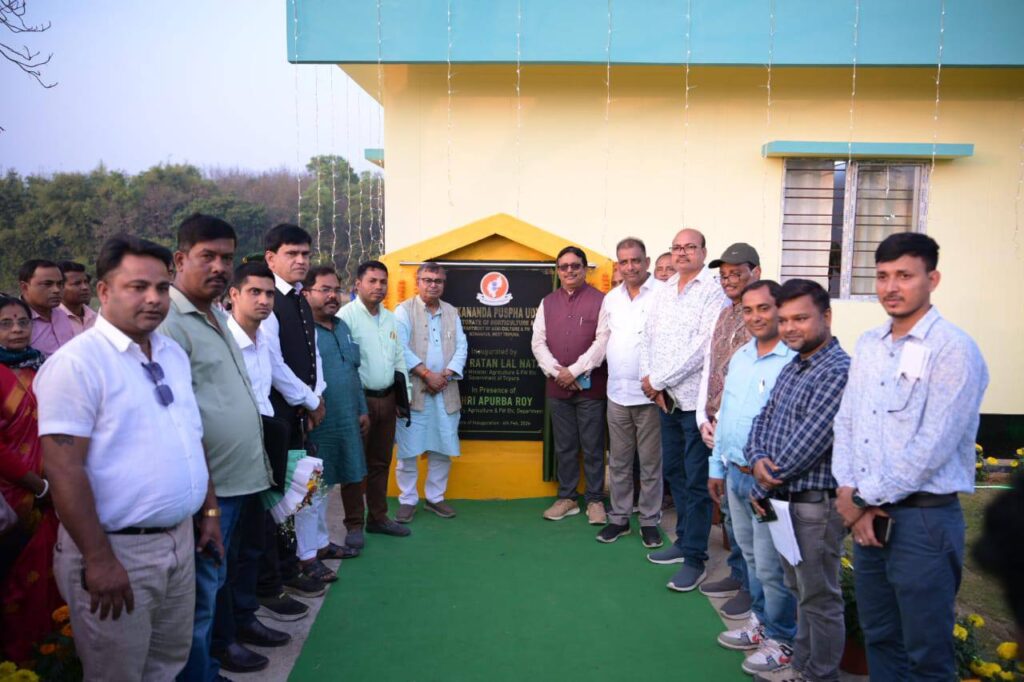
“Flowers play an essential role in social, cultural, and religious activities. They are used in greetings, festivals, religious ceremonies, and public events. Given Tripura’s fertile soil and abundant rainfall, the state is naturally suited for large-scale flower cultivation,” Nath said.
According to the Minister, the perception of floriculture among farmers has changed significantly. Earlier, flowers were grown mainly for local use and small markets, but today they contribute substantially to farmers’ annual income. Several cultivators are now earning lakhs of rupees each year by adopting improved techniques, diversified crops, and protected cultivation methods.
Citing individual success stories, Nath said Sentu Bhowmik of Barjala earns approximately Rs 8 lakh annually from flower cultivation, while Pradip Sarkar of Kanchanmala earns nearly Rs 12 lakh. Farmers such as Jayanta Dey of Chandibari and Indrajit Debnath of Baikhora earn between Rs 8 lakh and Rs 9 lakh per year, demonstrating the sector’s income potential.
“Flower cultivation has significantly improved the livelihoods of farmers. In the past, crops like marigold, rose, and rajanigandha were grown mainly in open fields with limited productivity. Today, modern methods have increased yield and quality,” the Minister said.
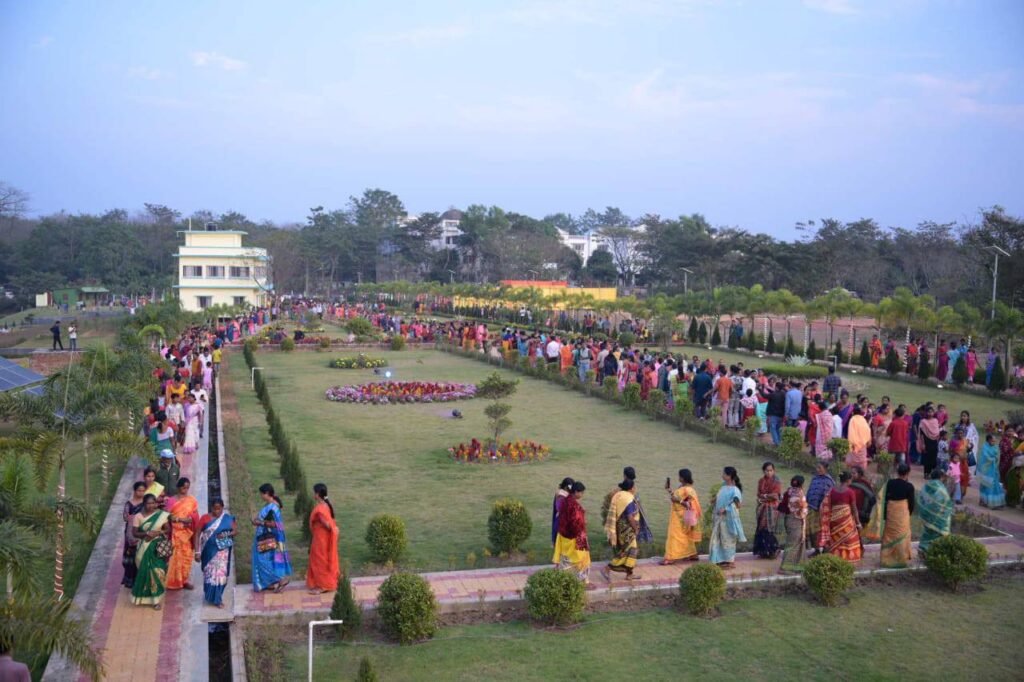
Providing data on the sector’s expansion, Nath said that before 2018, flowers were cultivated on 2,738 kani of land across Tripura. Over the last seven years, the area under floriculture has expanded to 11,720 kani, marking a more than fourfold increase. (One kani is equivalent to 0.34 acres.)
The number of farmers engaged in floriculture has also risen dramatically. “Earlier, only 2,190 farmers were involved in flower cultivation. That number has now grown to 59,100 farmers,” Nath said. Production has increased from 1,117 metric tonnes to 2,704 metric tonnes during the same period, reflecting both increased land coverage and better farming practices.
Another major achievement highlighted by the Minister is Tripura’s growing self-reliance in flower production. Earlier, the state met only 35 percent of its flower demand through local cultivation, relying heavily on imports from outside. Currently, around 89 percent of the state’s flower requirement is fulfilled through local production, with only about 21 percent sourced externally.
Nath also emphasized the growing adoption of protected cultivation for high-value flowers. Crops such as orchids, gerbera, and anthurium are increasingly being grown in controlled environments to meet rising market demand.
“Earlier, protected cultivation was carried out in just 225 units. That number has now increased to 504 units. The share of protected cultivation has risen from 25 percent to 43 percent, indicating strong demand and better returns for farmers,” he said.
| Also Read: Scholarship delays spark student protest at Tripura OBC |
Stressing the importance of farmers in society, the Minister said agriculture remains one of the most respected professions worldwide. “There is no one who does not love flowers and children. Flowers have the power to bring positivity, beauty, and transformation to people’s lives,” Nath added.
The rapid growth of floriculture in Tripura reflects the success of government support, farmer participation, and the state’s natural advantages. With rising demand and improved infrastructure, the sector is expected to play an even bigger role in strengthening rural livelihoods and the state’s agricultural economy in the years ahead.





