


Tripura Power Minister Ratan Lal Nath says electricity tariffs rose 40% in eight years, while highlighting subsidies, smart meters, infrastructure expansion, solar power and measures to ensure uninterrupted electricity supply across the state.
Tripura Power Minister Ratan Lal Nath on Thursday informed the state Legislative Assembly that electricity tariffs in Tripura have increased by around 40 per cent during the past eight years under the present government, while the Left Front government had raised tariffs by 116 per cent during its last eight years in office.
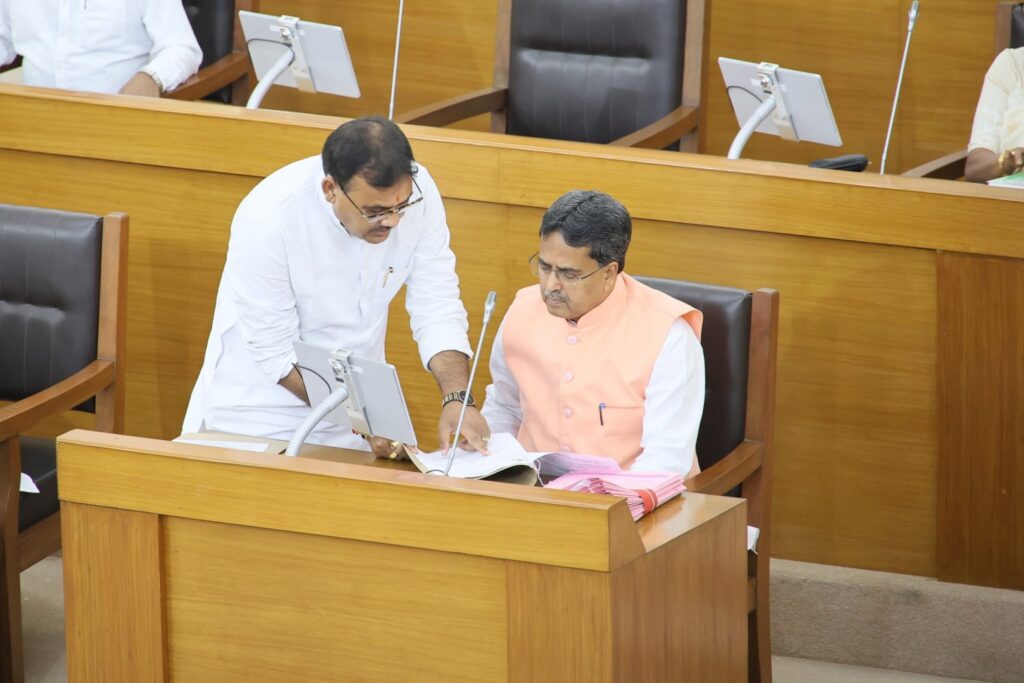
Participating in a short-duration discussion on public issues raised by the Opposition, Nath said tariff decisions were not taken directly by the state government or the Tripura State Electricity Corporation Limited (TSECL). He clarified that electricity tariff revisions are decided by the Electricity Regulatory Commission after examining relevant factors, while TSECL is responsible for implementing the approved tariff structure.
The minister also highlighted the government’s response to the latest tariff increase, saying that the state government and Chief Minister intervened immediately after the revision. Following discussions, the government decided to provide a 100 per cent subsidy on the additional tariff burden imposed on consumers.
According to Nath, consumers who have already paid the additional amount following the tariff revision will not lose the money. The excess amount, he said, will be adjusted against their subsequent electricity bills. The decision, he added, was aimed at protecting consumers from the immediate financial impact of the tariff hike.
Addressing concerns over smart meters, Nath said their installation has been undertaken in several states in line with a mandate from the Centre. He cited Himachal Pradesh, where approximately 43 per cent of electricity consumers have been covered by smart meters, and Jammu and Kashmir, where coverage has reached around 73 per cent.
In Tripura, the minister said smart meters have been installed for approximately four lakh consumers. He also claimed that the smart-metering initiative in the state had started during the previous Left Front government in 2015, but alleged that the programme was not implemented effectively at that time.
Nath further alleged that the Indian Audit and Accounts Department had flagged financial irregularities related to a smart-meter work order involving approximately Rs 80 crore. The issue formed part of his broader response to criticism over electricity-related decisions and infrastructure development.
The minister said the state government and the Power Department have undertaken several initiatives to strengthen Tripura’s electricity network and improve the reliability of power supply, particularly during rain, storms and other adverse weather conditions.
Highlighting infrastructure expansion, Nath said the number of 132 kV substations in the state has increased from 12 to 21. Work on two additional 132 kV substations is currently underway. Similarly, the number of 33 kV substations has increased from 44 to 75, while construction of another 18 substations is in progress.
He said 272 kilometres of railway-related power connectivity work has been completed, while 408 kilometres of underground cable has been laid to reduce the impact of storms and heavy rainfall on electricity distribution.
The Power Minister also highlighted the installation of 1,464 circuit kilometres of covered conductors designed to minimise power disruptions during storms. Work on another 360 circuit kilometres is underway, he said.
In addition, work orders have been issued for live-line maintenance and the use of drone technology to monitor electricity infrastructure. The department is also working on establishing mobile substations, which are expected to provide additional flexibility during emergencies and supply disruptions.
Nath said new technology has also been introduced between the 79 Tilla Power Station and Rukhia, with approximately 75 per cent of the work completed. He further stated that a new tower line has been established in Gandacherra, an area where such infrastructure had previously been unavailable.
The minister also highlighted efforts to expand electricity access in tribal and remote areas. He said power connections have been provided to 11,692 Reang families who previously did not have access to electricity.
Under the PM Surya Ghar Muft Bijli Yojana, approximately 17,400 registrations have been recorded in Tripura, while 4,540 solar systems have already been installed. These installations are generating around 15.5 MW of electricity, according to the minister.
Nath further said the government is considering financial assistance for solar installations for approximately 1.5 lakh families during the first phase. He pointed out that nearly four lakh families in Tripura consume up to 50 units of electricity, indicating significant scope for household-level solar energy adoption.
On electricity generation, the minister said the decline in gas-based power generation has affected the state’s overall electricity output. Despite the challenges, he reiterated that the government is committed to strengthening power infrastructure, expanding access and ensuring reliable electricity supply.
The minister’s statement came amid an Assembly discussion focusing on electricity tariffs, consumer concerns and the government’s measures to improve the state’s power sector. Nath maintained that the government’s interventions, including the full subsidy on the latest additional tariff burden, were intended to protect consumers while continuing investment in infrastructure and renewable energy.
| Also Read: NE poised to play crucial role in space tech journey: Guv |
The developments outlined in the Assembly indicate that Tripura’s power sector is simultaneously facing challenges related to generation costs and tariff revisions while undergoing significant infrastructure expansion. The government has sought to address these concerns through subsidies, modernisation of the distribution network, smart metering, underground cabling, covered conductors and greater adoption of solar power.





