


Tripura ministers Ratan Lal Nath and Sushanta Chowdhury abandon escort vehicles to promote fuel conservation and sustainability. Inspired by Prime Minister Narendra Modi’s appeal, the ministers adopt bicycles and e-rickshaws, highlighting austerity, responsible governance, environmental awareness, and cost-saving initiatives across the state.
A strong message on fuel conservation and sustainable governance has emerged from Tripura after senior ministers of the state government voluntarily gave up the use of official escort vehicles and adopted simpler modes of transport for daily travel.
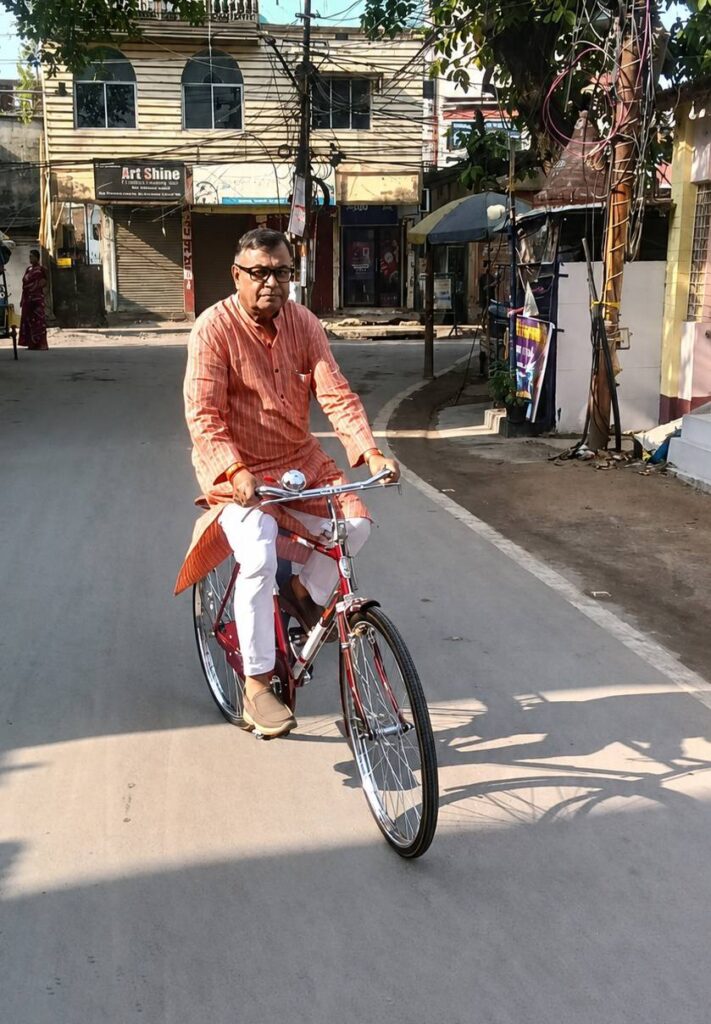
Power, Agriculture and Farmers Welfare Minister Ratan Lal Nath has taken the lead by choosing bicycles and e-rickshaws instead of conventional government convoys, drawing widespread public attention and praise across the state. His move comes in response to Prime Minister Narendra Modi’s appeal for fuel conservation amid growing global energy concerns.
On Thursday, Nath arrived at the Civil Secretariat in an e-rickshaw, surprising many officials and members of the public. Speaking to reporters, he confirmed that he had formally requested the withdrawal of his two official escort vehicles by writing to the Director General of Police.
The minister explained that reducing dependence on fuel-powered convoys was both an economic and environmental necessity. According to Nath, limiting the use of official vehicles to essential long-distance travel could help save nearly Rs 40,000 every month in fuel expenses alone.
He stated that leaders should demonstrate responsible behavior through their actions rather than merely discussing patriotism and sustainability in speeches. Nath also shared his personal experience of riding a bicycle again after many years, saying the experience reminded him of his childhood and strengthened his connection with ordinary people and rural life.
The minister urged citizens to contribute towards protecting natural resources by adopting practical fuel-saving habits in daily life. He emphasized that small changes in personal behavior can collectively make a major difference for the environment and the economy.
The initiative is part of a broader austerity campaign introduced by Tripura Chief Minister Manik Saha. The Chief Minister has already reduced the size of his official convoy by half and has preferred rail travel during several state visits as part of efforts to reduce government expenditure and fuel consumption.
In another important step, the Tripura government has directed 50 percent of Group C and Group D employees to work from home on a rotational basis. Officials believe the measure will help reduce operational costs, transportation expenses, and fuel usage while encouraging administrative efficiency.
Transport and Tourism Minister Sushanta Chowdhury also announced a similar decision through a social media statement. He declared that he would discontinue the use of his two escort vehicles with immediate effect in response to the Prime Minister’s appeal for responsible energy consumption.
Chowdhury stressed that every citizen has a responsibility to support national interests during periods of global energy challenges. He noted that public representatives should lead by example and inspire society to adopt sustainable and economical practices.
The decisions by the two ministers have generated considerable public discussion in Tripura, with many citizens praising the leadership for promoting simplicity, accountability, and environmental consciousness. Social media users and political observers described the move as a rare example of leaders practicing what they preach.
Experts believe such symbolic gestures can create greater public awareness about fuel conservation at a time when rising global fuel prices and environmental concerns continue to affect economies worldwide. They also point out that reducing unnecessary government expenditure can help strengthen public confidence in governance.
The developments have positioned Tripura as a state attempting to combine administrative austerity with environmental responsibility. Observers say the ministers’ actions send a powerful signal that meaningful national change can begin with small but visible personal decisions taken by public leaders.
| Also Read: Tripura Assures Adequate Fuel Stock Amid Rising Panic Buying |
As debates around sustainable development and responsible governance continue across the country, the actions of Tripura’s ministers are likely to remain an important example of how public officials can influence social behavior through practical measures rather than symbolic statements alone.





