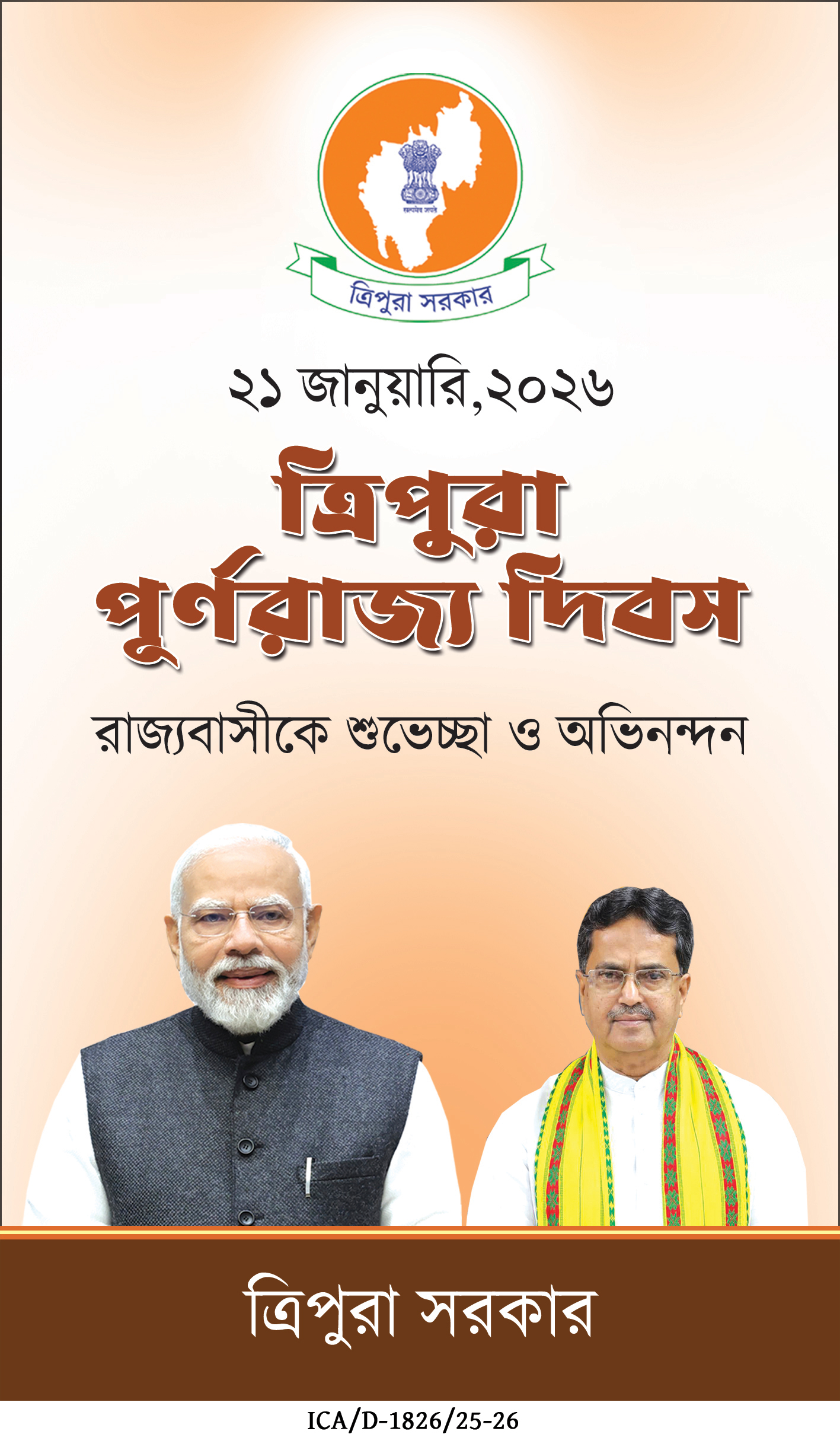
Tripura Chief Minister Manik Saha accuses opposition of stalling Women’s Reservation Bill amendment for political gain, delaying 33% quota implementation and impacting women’s representation ahead of 2029 elections, intensifying political tensions across India.
A fresh political confrontation over women’s representation has emerged after Tripura Chief Minister Manik Saha accused opposition parties of deliberately obstructing the amendment to the Women’s Reservation Bill for political advantage. Addressing a press conference at the state BJP headquarters, the Chief Minister said the move not only delayed a crucial reform but also “insulted women across the country.”
According to Dr. Saha, the proposed amendment aimed to accelerate the implementation of the landmark Nari Shakti Vandan Act, which mandates 33 percent reservation for women in the Lok Sabha and State Legislative Assemblies. He described the legislation as a “revolutionary chapter in Indian democracy,” emphasizing its potential to reshape the political landscape and ensure equitable participation of women in governance.
The Chief Minister alleged that opposition groups, particularly the INDIA Alliance, have consistently adopted a “self-centered approach” that undermines long-term national development goals. “The amendment could not be passed because of deliberate stalling tactics. This is not just a political setback; it is a setback for every woman aspiring to participate in nation-building,” he said.
A Long-Standing Demand
Highlighting the historical context, Dr. Saha noted that the demand for women’s reservation in legislative bodies has been ongoing for nearly three decades. The first attempt to introduce such a bill dates back to 1996 during the tenure of former Prime Minister H. D. Deve Gowda. Despite multiple efforts, the proposal faced repeated roadblocks.
Subsequent attempts under former Prime Minister Atal Bihari Vajpayee between 1998 and 2003 also failed to secure passage. In 2010, the bill cleared the Rajya Sabha during the tenure of Manmohan Singh, but it did not pass in the Lok Sabha due to opposition from certain regional parties.
It was only in 2023, under the leadership of Prime Minister Narendra Modi, that the bill was successfully passed in both Houses of Parliament with a significant majority. The law provides for one-third reservation of seats for women, including within Scheduled Caste and Scheduled Tribe constituencies, and introduces a rotational mechanism through delimitation to ensure wider representation.
Delay in Implementation
Despite its passage, the implementation of the Act remains contingent on the completion of the national census and subsequent delimitation exercise. Dr. Saha pointed out that this procedural requirement could delay its enforcement by several years.
To address this concern, the Central Government introduced an amendment in April 2026 aimed at enabling the law’s implementation in time for the 2029 Lok Sabha elections. However, the Chief Minister alleged that opposition parties disrupted proceedings and prevented the amendment from being approved.
“There was a detailed discussion in Parliament, but ultimately the opposition did not allow the bill to pass. This shows their lack of commitment toward women’s empowerment,” he said.
Political Reactions Intensify
The Chief Minister also criticized major opposition parties, including Congress and Left groups, accusing them of historically resisting reforms that promote gender equality in politics. He claimed that women, who constitute nearly 55 percent of India’s population, continue to face systemic barriers due to such political decisions.
“Our government is committed to empowering women through policy and representation. The opposition may have delayed this process temporarily, but the people—especially women—will respond appropriately,” Dr. Saha asserted.
The remarks have added to the growing political debate surrounding the Women’s Reservation framework, with both ruling and opposition parties presenting contrasting narratives. While the government maintains that it is taking decisive steps toward gender-inclusive governance, opposition leaders have argued for broader consultations and clarity on implementation timelines.
Broader Implications
Political analysts suggest that the delay in passing the amendment could have significant implications for the pace of political reforms in India. The Women’s Reservation Act is widely seen as a transformative policy that could enhance diversity in legislative bodies and influence policymaking priorities.
Experts argue that increased representation of women in politics often correlates with stronger focus on social welfare, education, and healthcare. Therefore, any delay in implementing such a policy could impact not just political representation but also developmental outcomes.
| Also Read: Tripura HC slams misleading PIL, orders Tepania hospital road restoration |
At the same time, the controversy underscores the complexities of parliamentary consensus in a multi-party democracy. Legislative reforms of this scale often require extensive negotiation, and disagreements over procedural or political considerations can slow down progress.
As the debate continues, the future of women’s reservation in India remains closely tied to both procedural milestones and political will. While the law itself marks a historic step forward, its effective implementation will depend on overcoming legislative hurdles and ensuring broad-based support across the political spectrum.