


Tripura launches its first sweet grape cultivation initiative, marking a major step toward a grape revolution in the Northeast. Agriculture Minister Ratan Lal Nath announced research on 18 additional grape varieties, farmer training, vineyard development, and NABARD-supported projects to boost horticulture, value addition, and rural incomes.
In a landmark development for the agricultural sector of Tripura, the state government has unveiled an ambitious roadmap to transform the state into a promising grape-growing region after the successful cultivation of sweet grapes for the first time in the Northeastern state. Agriculture and Farmers’ Welfare Minister Ratan Lal Nath on Wednesday announced a series of initiatives aimed at promoting commercial grape cultivation, including trials of 18 additional grape varieties, farmer training programmes, vineyard development, and technology-driven support mechanisms.
The announcement was made during a field day-cum-awareness programme on commercial grape cultivation and the launch of NABARD-funded projects at Chandipur in Unakoti district. The programme highlighted the state government’s growing emphasis on horticultural diversification and its commitment to creating new income opportunities for farmers.
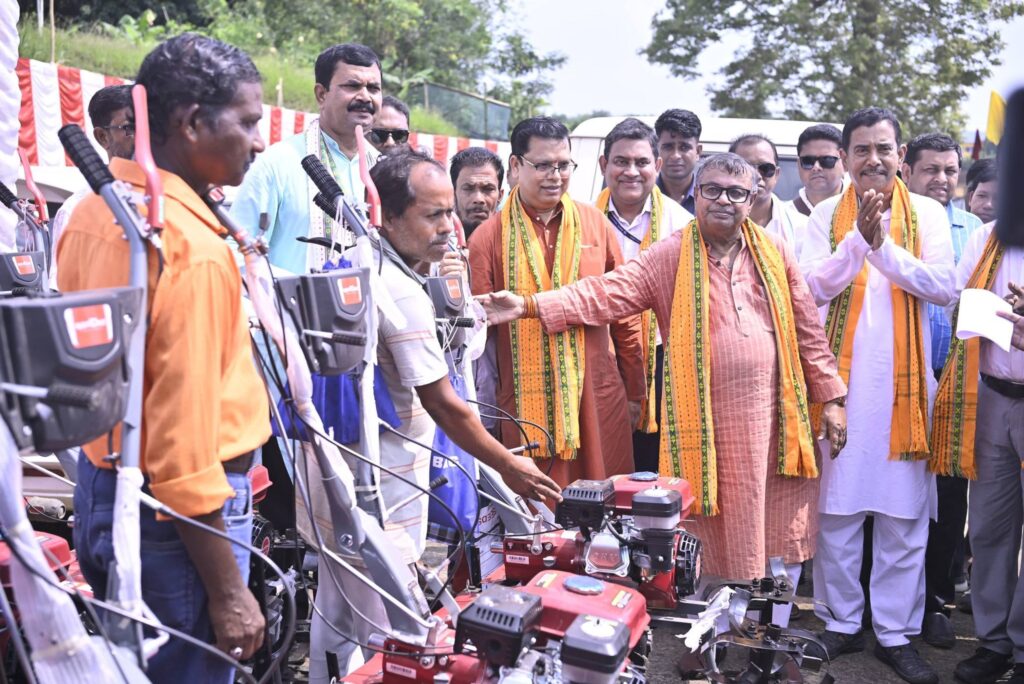
During the event, Nath visited a grape orchard where sweet grapes have been cultivated successfully, marking a significant breakthrough for agricultural scientists and farmers alike. The minister also distributed power-operated agricultural equipment among farmers to encourage the adoption of modern farming techniques and improve productivity.
Speaking at the programme, Nath said the state government is determined to establish a strong foundation for grape cultivation through scientific research, technological innovation, and farmer-centric support. He noted that while grape cultivation has traditionally been concentrated in specific regions of India, Tripura’s unique agro-climatic conditions offer significant potential if appropriate technologies and cultivation practices are developed.
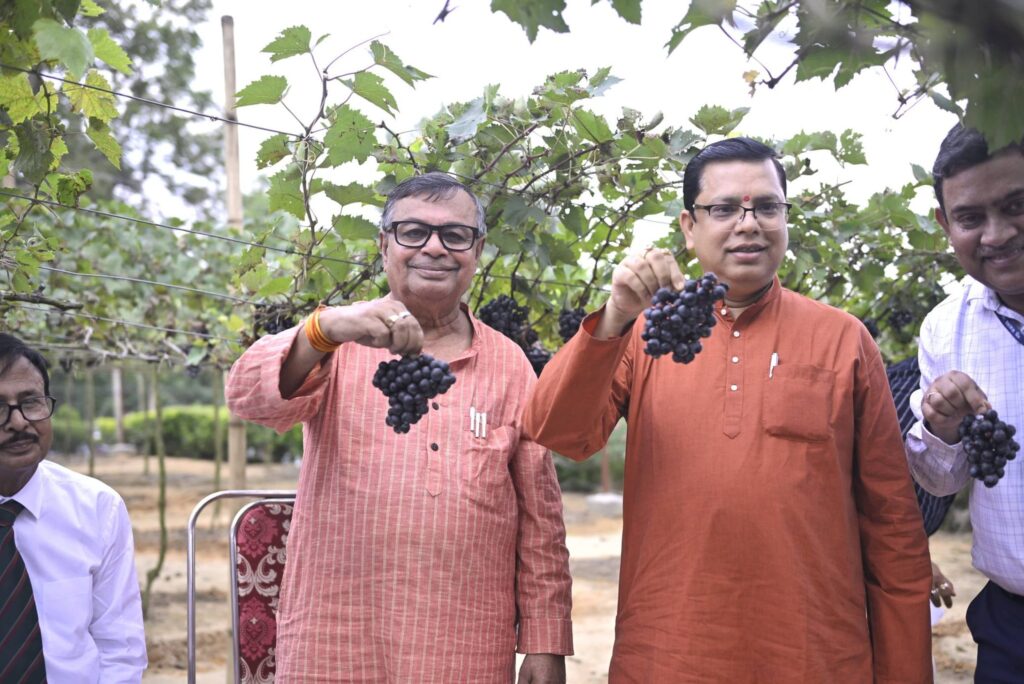
According to the minister, the average grape productivity in India stands at around 24 metric tonnes per hectare. He expressed confidence that Tripura can emerge as a competitive grape-producing state by leveraging scientific interventions, quality planting materials, and effective farmer training initiatives.
Nath revealed that scientists in Tripura have been conducting extensive research on grape cultivation over the past several years. Their efforts have already yielded encouraging results, leading to the successful cultivation of four grape varieties, including two wine grape varieties. The achievement is being viewed as a major milestone in the state’s agricultural diversification strategy.
The minister further informed that after a gap of nearly two decades, the Krishi Vigyan Kendra (KVK), Unakoti, resumed research and development activities on grape cultivation in 2024. Preliminary findings have shown promising outcomes in terms of fruit sweetness, yield potential, and overall quality, indicating that grape cultivation could become commercially viable in the state.
As part of the ongoing research programme, six grape varieties were brought from the ICAR–National Research Centre for Grapes in September 2024 and planted under experimental conditions. Scientists are now studying their performance to identify the most suitable varieties for Tripura’s climate and soil conditions.
Nath said researchers are working tirelessly to standardise grape cultivation techniques specifically suited to non-traditional grape-growing regions. Their objective is to develop sustainable and profitable cultivation models that can be replicated across different parts of the state.
Despite the encouraging progress, the minister acknowledged several challenges that continue to hinder large-scale grape cultivation in Tripura. Among the key issues are insufficient fruit sweetness in some varieties, limited adaptability of introduced cultivars, excessive rainfall, high humidity levels, restricted availability of certain agrochemicals required for grape farming, and inadequate awareness among farmers regarding scientific grape cultivation practices.
To overcome these obstacles, scientists have introduced specialised treatments and management practices designed to improve grape quality and sweetness. These include advanced nutrient management techniques and the use of growth regulators to enhance fruit development and improve market value. According to Nath, the results achieved so far have been highly encouraging and provide confidence for future expansion.
Outlining the government’s long-term vision, the minister announced that recommendations based on ongoing research findings will be prepared and submitted for policy-level support. He also disclosed that trials involving 18 additional grape varieties will be undertaken to identify cultivars best suited to Tripura’s environmental conditions.
The future roadmap includes intensified research and technology development, corrective measures based on field observations, establishment of grape cultivation clusters, and development of vineyards in suitable locations across the state. These initiatives are expected to create a sustainable ecosystem for grape farming and encourage wider farmer participation.
In addition to cultivation support, the government plans to promote value addition through training programmes on grape juice production, Ready-to-Serve (RTS) beverages, and post-harvest management practices. Plans are also underway to establish cluster-based small-scale grape juice processing units that will help farmers generate additional income and reduce post-harvest losses.
| Also Read: Tripura CM Joins Key NEC Devt Discussions |
The minister assured that farmers would receive necessary agricultural inputs, technical guidance, and institutional support to ensure successful adoption of grape cultivation. He stressed that empowering farmers with scientific knowledge and modern technologies would be critical to the success of the initiative.
Sports and Youth Affairs Minister Tinku Roy, senior officials of the Directorate of Horticulture, agricultural scientists, experts, and local farmers attended the programme. The event marked the beginning of what the state government hopes will become a grape cultivation revolution, opening new avenues for agricultural growth, rural employment, and economic development across Tripura.
| Also Read: Tripura Shines at National Panchayat Awards 2025 |





