Tripura CM Manik Saha hails BJP’s election victories as end of fear politics, calling it a historic mandate for development, stability, and governance, while crediting national leadership and grassroots workers for the party’s expanding influence across multiple states.
A charged political atmosphere unfolded in Tripura’s capital as celebrations marked what party leaders described as a decisive shift in public sentiment following the latest electoral outcomes in eastern and southern India. The gathering reflected both regional enthusiasm and national political messaging, with leaders framing the results as a broader endorsement of governance and development-focused politics.
Chief Minister Dr. Manik Saha on Monday asserted that the recent electoral victories signal what he called the “end of fear politics,” emphasizing that voters have rejected intimidation and instability in favor of democratic change. Addressing a large rally in Agartala, he described the verdict as a transformative moment not just for one state, but for the country as a whole.
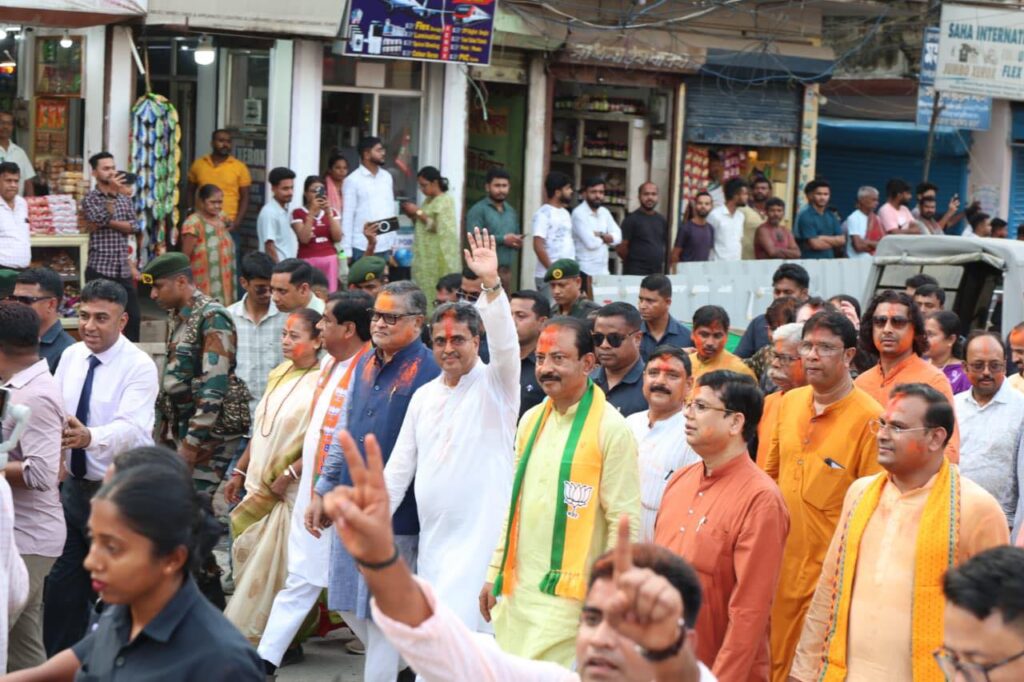
According to Dr. Saha, the outcome represents a strong public mandate against what he termed a prolonged atmosphere of fear and administrative failure. He stated that people had chosen a path aligned with stability, peace, and development, indicating a shift in political priorities among voters. “This is a victory of the people who have chosen progress over fear,” he said, highlighting the symbolic importance of the results beyond state boundaries.
The Chief Minister credited the electoral success to coordinated leadership at multiple levels, citing the role of Prime Minister Narendra Modi, Union Home Minister Amit Shah, and BJP National President J.P. Nadda. He noted that strategic direction from central leadership, combined with grassroots mobilization by party workers, contributed significantly to the outcome.
Dr. Saha also pointed to the Bharatiya Janata Party’s performance in other regions, including Assam, Puducherry, Kerala, and the Dharmanagar by-election in Tripura. He argued that these results collectively indicate a growing national inclination toward governance models focused on infrastructure, welfare delivery, and law and order.
In his remarks, the Chief Minister alleged that certain regions had long experienced governance challenges, including corruption and lack of administrative accountability. He claimed that the recent mandate demonstrates a clear public rejection of such issues, reinforcing the importance of transparent and development-oriented governance.
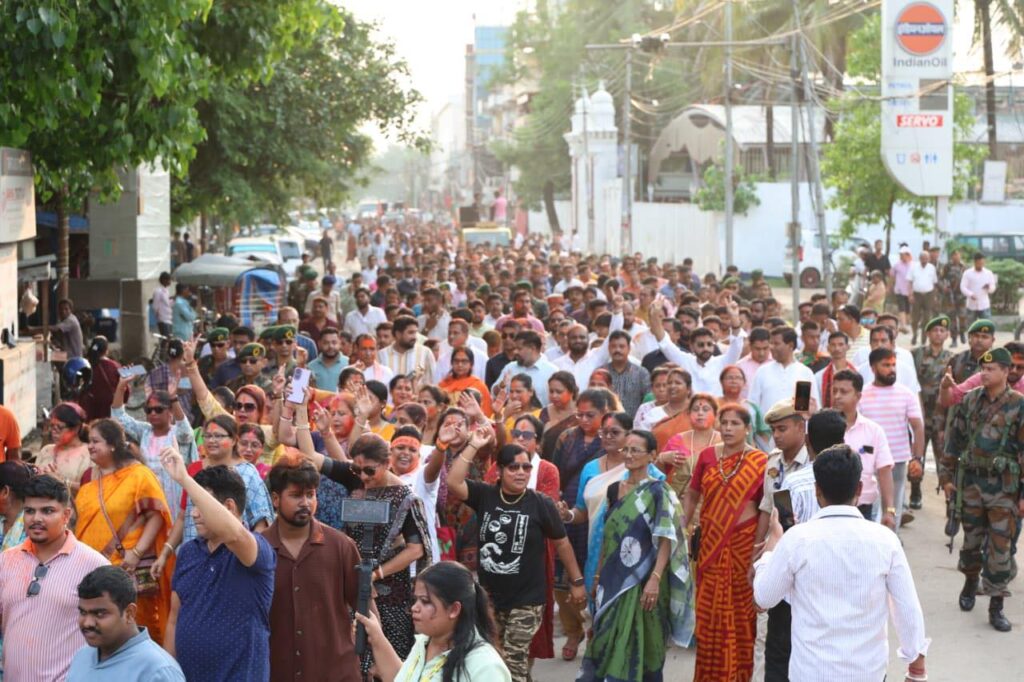
The rally in Agartala witnessed participation from several prominent state leaders, including BJP State President Rajib Bhattacharjee, along with ministers, legislators, and senior party office bearers. A large number of party workers and supporters joined the procession, which moved through key city routes, showcasing the scale of the celebrations.
Rajib Bhattacharjee, addressing the gathering, described the electoral outcome as a “people’s victory” and emphasized that it reflects growing trust in development-driven policies. He congratulated voters, party workers, and supporters, acknowledging their efforts in achieving what he termed a significant political milestone.
| Also Read: Tipra Motha shocks with bold youth leadership reshuffle in TTAADC |
The event also highlighted the role of party workers from Tripura who actively campaigned in other states, particularly West Bengal, during the elections. Their involvement was praised by leaders as an example of organizational unity and commitment across state lines.
Political observers note that such statements and celebrations often carry broader implications, as parties seek to position electoral victories within a national narrative. While supporters view the results as a turning point, critics argue that the interpretation of mandates remains subject to political framing and debate.
| Also Read: Deb’s “no defeat” claim proven in Bengal election outcome |
As the political landscape continues to evolve, the recent developments underscore the dynamic nature of electoral politics in India, where regional outcomes increasingly contribute to shaping national discourse. The emphasis on governance, development, and public trust is likely to remain central themes as parties prepare for future contests.