


Tripura Chief Minister Manik Saha asserts India will become the world’s third-largest economy by 2030, highlighting youth power, AI-driven growth, tribal development, and protection of Kokborok and minority languages at ABVP’s tribal student conference in Agartala.
Tripura Chief Minister Prof. Dr. Manik Saha on Thursday expressed strong confidence that India will emerge as the world’s third-largest economy by 2030, emphasizing that the nation’s youth and students will be the driving force behind this transformation.
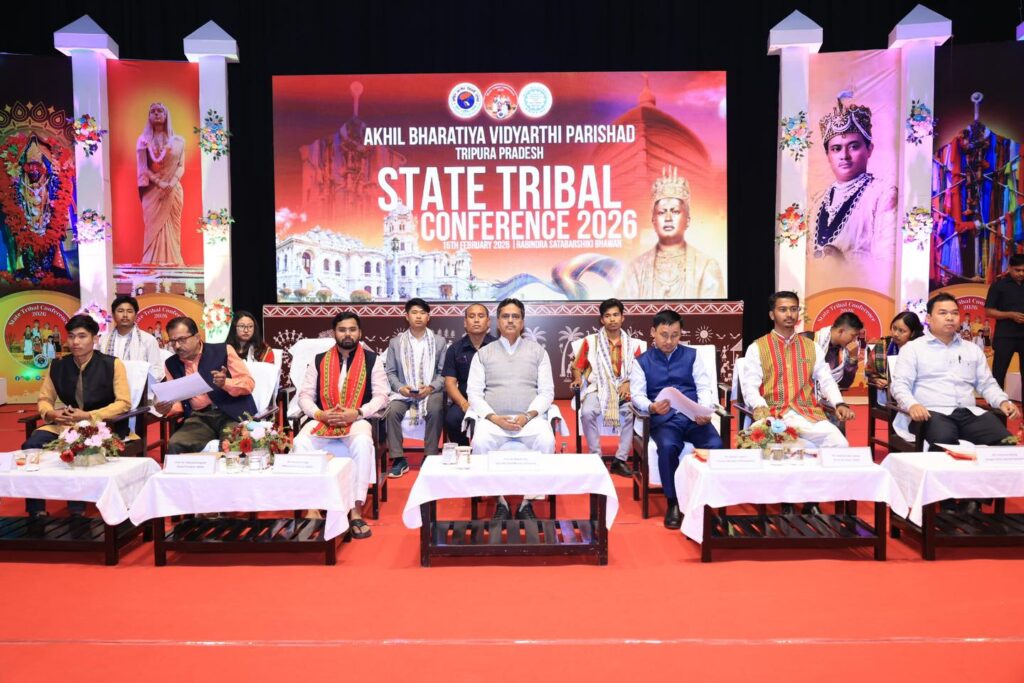
Addressing the tribal student conference organized by Akhil Bharatiya Vidyarthi Parishad (ABVP) at Rabindra Bhavan, the Chief Minister highlighted the growing economic stature of India and the crucial role of young citizens in shaping the country’s future.
Dr. Saha said that witnessing the overwhelming presence of students at the conference reaffirmed his belief that Tripura is moving toward a brighter and stronger future. “The youth between the ages of 18 and 35 represent nearly 65 percent of our population. They are the foundation of India’s growth story. Their energy, creativity, and commitment will determine how far the country progresses,” he said.
India’s Economic Rise: From 11th to 3rd Position
The Chief Minister pointed out that India has already climbed significantly in global economic rankings. “Earlier, India stood at the 11th position in terms of economic strength. Today, we are in fourth place. By 2030, India will become the third-largest economy in the world,” he asserted.
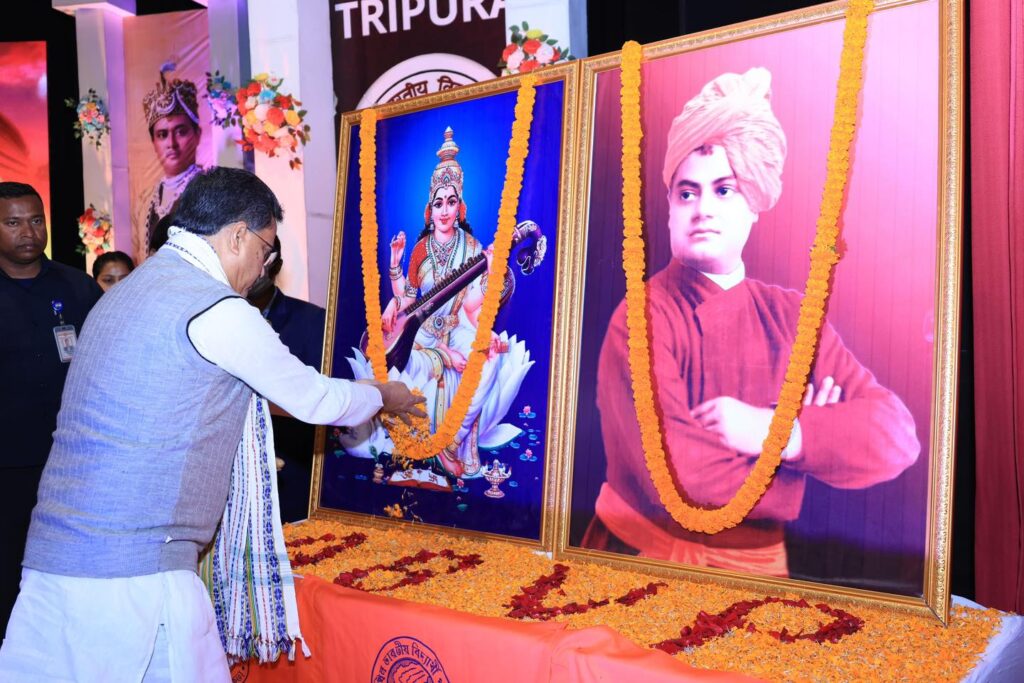
He credited Prime Minister Narendra Modi for steering the country toward stability and rapid development since assuming office in 2014. According to Dr. Saha, the government’s vision encompasses national security, socio-economic progress, infrastructure expansion, and technological advancement.
Referring to the Prime Minister’s guiding principle of “Sabka Saath, Sabka Vikas, Sabka Prayas, Sabka Vishwas,” he said that inclusive growth remains the core objective of the government’s development agenda.
Youth Empowerment and AI in Education
Dr. Saha emphasized that students must think beyond academics and actively participate in nation-building initiatives. He cited programs such as Swachh Bharat Abhiyan and voluntary blood donation drives as examples of social engagement that foster responsibility and patriotism.
He also highlighted the importance of Artificial Intelligence in the modern era. “This year’s budget has made provisions and concessions for AI development. AI offers tremendous opportunities for learning and innovation. However, while AI can assist us, we cannot rely on it entirely. Knowledge, critical thinking, and cultural values must remain central,” he said.
The Chief Minister stressed that India’s strength must be built not only on economic metrics but also on intellectual growth and preservation of cultural heritage.
Focus on Tribal and Minority Language Development
Reiterating his government’s commitment to inclusive development, Dr. Saha stated that tribal welfare remains a top priority. He emphasized the importance of promoting and preserving Kokborok, the language spoken by a significant section of Tripura’s tribal population.
“Our government is committed to the development, preservation, and promotion of Kokborok and other minority languages. Unless students learn in their mother tongue, true understanding cannot be achieved,” he said.
However, he expressed concern over what he described as attempts to mislead tribal students by raising what he termed “unjustified demands” regarding the adoption of the Roman script for Kokborok. According to him, such efforts are politically motivated and aimed at creating division within society.
“There is a deeper conspiracy and negative political intent behind these divisive attempts. We must stand united against such politics and focus on constructive nation-building,” he stated, urging students to channel their strength toward positive development.
Reflection on the Past and Vision for the Future
Dr. Saha also reflected on the political climate of the 1970s, alleging that during the communist era, educational institutions often faced instability. He claimed that students were drawn into political movements at the cost of their education, leading to long-term setbacks.
“In those days, uncertainty prevailed in schools and colleges. Generations were affected. Today, we must ensure stability, quality education, and opportunities for all,” he said.
He concluded by urging students to prioritize love for the nation and contribute meaningfully to society. “We must think about the country in everything we do. Nation-building is not the responsibility of the government alone; it is a collective duty,” he added.
| Also Read: Pradyot Vows Massive 2028 Assembly Victory |
The conference was attended by Higher Education Minister Kishor Burman, former MP Rebati Tripura, ABVP All India General Secretary Kamlesh Singh, State President Prof. Dr. Debraj Panigrahi, Tirtharam Reang, State Secretary Ravi Shankar Halder, Arjun Tripura, and several other leaders and representatives.
As India eyes its ambitious economic target for 2030, the message from Tripura’s leadership was clear: youth empowerment, technological innovation, linguistic inclusivity, and cultural preservation will form the pillars of a stronger and globally competitive India.





