Tripura targets top national rank in power sector as Power Minister Ratan Lal Nath stresses uninterrupted 24×7 electricity, renewable energy expansion, solar power adoption, and infrastructure strengthening to ensure affordable, reliable, and sustainable energy for all.
Tripura is aiming to emerge as the best-performing state in India in the power sector by ensuring uninterrupted 24×7 electricity supply, Power Minister Ratan Lal Nath said on Tuesday. The state government is strengthening infrastructure, expanding renewable energy adoption, and improving service delivery to achieve this goal.
Speaking at a programme held at the corporate office of the Tripura State Electricity Corporation Limited (TSECL), Nath underlined that reliable electricity is the backbone of economic growth and social development. He said uninterrupted power supply was essential for industries, healthcare services, education, agriculture, and household welfare.
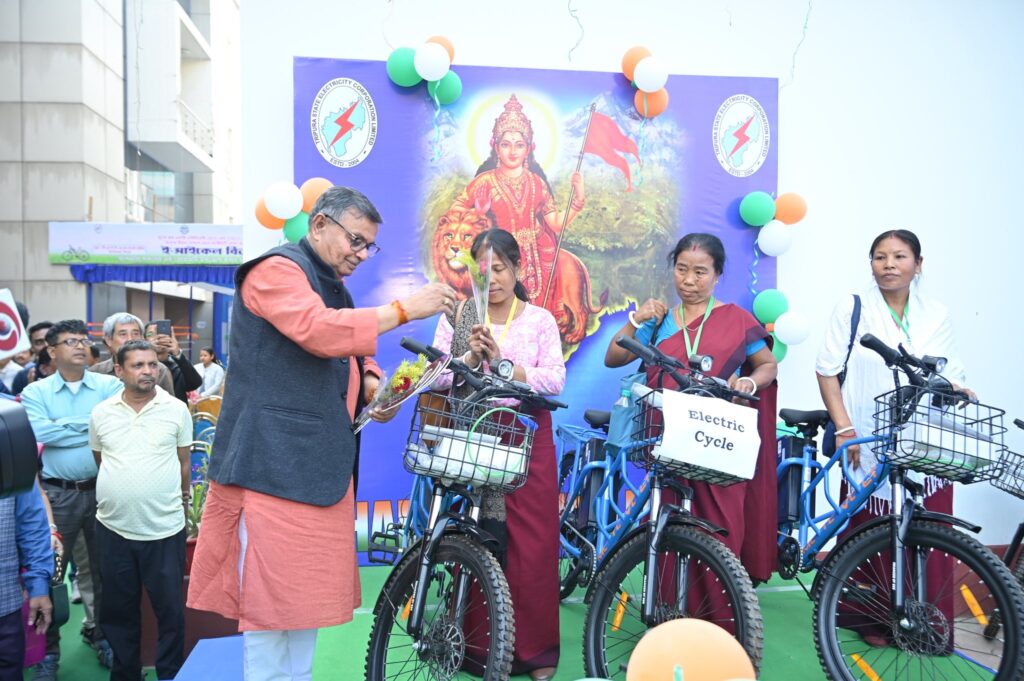
The event was jointly organised by the Bureau of Energy Efficiency and TSECL. As part of the programme, e-bicycles were distributed to 30 Accredited Social Health Activist (ASHA) facilitators to support their field activities and promote sustainable mobility.
According to the Power Minister, Tripura is currently ranked fourth in the country in terms of power supply performance, based on official assessments. The state government, he said, is determined to climb to the top position by modernising the power network, reducing outages, and ensuring efficient management of resources.
“Our objective is not just uninterrupted electricity, but also affordable, clean, and sustainable power for every household,” Nath said. He credited engineers, technicians, and field-level staff of the power department for maintaining system stability despite growing demand.
A major focus of the government’s strategy is renewable energy, particularly solar power. Nath highlighted that solar energy is rapidly becoming a cost-effective alternative to conventional power generation. He explained that hydropower projects typically cost between Rs 7 crore and Rs 20 crore per megawatt, while gas-based power generation costs range from Rs 5 crore to Rs 10 crore per megawatt. In comparison, solar power projects cost approximately Rs 4 crore per megawatt, making them more economical in the long run.
The minister said the state has already taken significant steps toward solar adoption. Solar-powered systems are currently being used to supply drinking water in 25 villages, ensuring uninterrupted water access even in remote areas. Additionally, solar pumps have been installed across nearly 38,000 kani of agricultural land, reducing dependence on conventional electricity and diesel-powered irrigation.
These initiatives, Nath said, are not only helping farmers secure reliable water supply but are also generating economic benefits. Several beneficiaries are earning additional income by producing solar power, while many households have seen a substantial reduction in their electricity bills.
Emphasising the link between clean energy and environmental protection, Nath said Tripura’s renewable energy push aligns with national goals on climate action and sustainable development. He added that the state government is encouraging wider adoption of energy-efficient technologies and renewable solutions to ensure long-term energy security.
During the programme, the minister also acknowledged the crucial role played by ASHA workers in the public healthcare system. He said ASHA facilitators are instrumental in vaccination drives, maternal and child healthcare, and community outreach, particularly in rural and underserved areas. Providing them with e-bicycles, he said, would improve mobility and efficiency while promoting eco-friendly transportation.
Power Secretary Abhishek Singh, National Health Mission Member Secretary Soubhik Debbarma, and senior officials from the power and health departments were present at the event. Officials said coordinated efforts between departments are helping Tripura integrate energy efficiency, public health, and sustainable development into a unified growth strategy.
With a strong focus on renewable energy, infrastructure upgrades, and inclusive development, Tripura is positioning itself as a model state in India’s power sector transformation.