


Tripura exports one metric tonne of premium Queen pineapples to New Delhi as Agriculture Minister Ratan Lal Nath pushes organic farming expansion. The state has exported organic products worth Rs 17 crore, strengthening national and international market linkages, boosting farmer incomes, and promoting sustainable agriculture through FPO-led initiatives.
Tripura has taken another significant step towards strengthening its position in the organic agriculture sector with the dispatch of one metric tonne of premium-quality Queen pineapples to New Delhi. The consignment, produced by Bokhari Organic Producers of Mandai, was flagged off by Agriculture and Farmers’ Welfare Minister Ratan Lal Nath on Monday as part of the state’s ongoing efforts to expand markets for organic produce and improve farmers’ incomes.
The shipment highlights the growing demand for Tripura’s organic agricultural products across India and abroad. According to Minister Nath, the state has already exported organic products worth nearly Rs 17 crore to domestic and international markets, reflecting increasing consumer preference for organically cultivated produce from Tripura.
The announcement came after a high-level review meeting held at the Tripura State Agricultural Research Centre in Arundhutinagar. The meeting focused on production, marketing, value addition, and market expansion strategies under the Mission Organic Value Chain Development for North Eastern Region (MOVCDNER) project.
Speaking after the meeting, Nath emphasized that the state government is committed to creating stronger market opportunities for organic farmers while ensuring better prices for their produce.
“Demand for Tripura’s organic agricultural products is steadily increasing in both national and international markets. The Agriculture Department is continuously working to enhance production and create wider market access for farmers,” he said.
The Minister noted that the export of premium Queen pineapples to the national capital represents an important milestone in connecting Tripura’s agricultural sector with larger markets. He stated that the initiative would not only expand the market reach of organic products but also help ensure fair prices for cultivators.
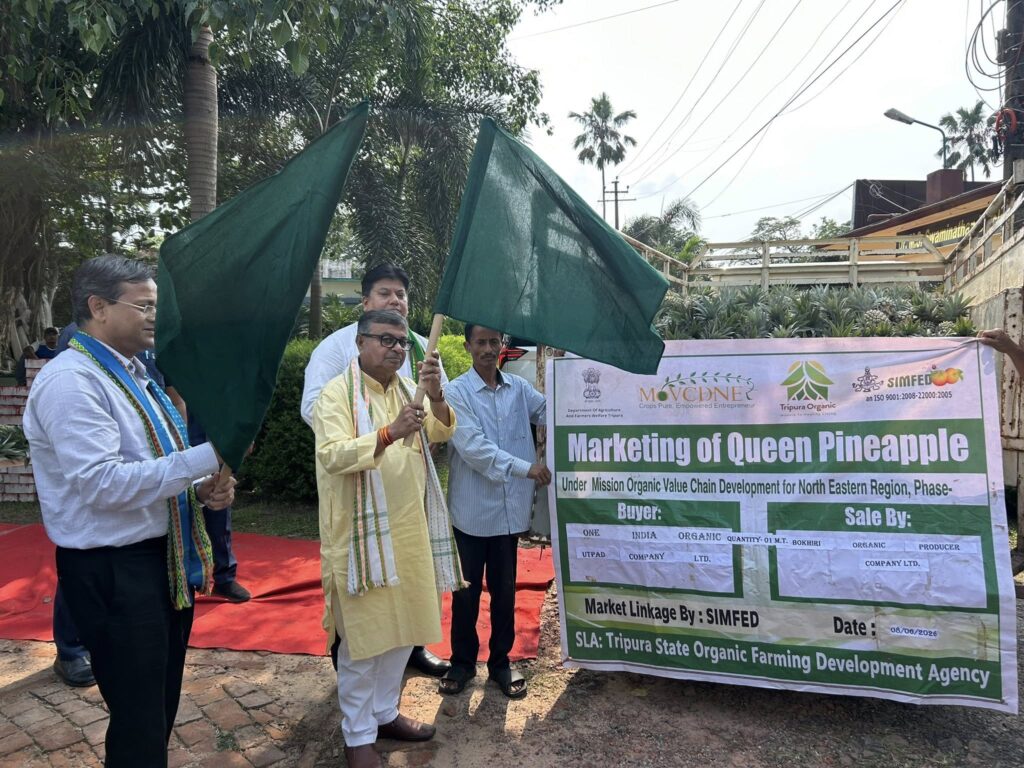
During the programme, Nath formally flagged off the consignment of one metric tonne of premium-quality Queen pineapples grown by Bokhari Organic Producers, an organic growers’ collective based in Mandai. The shipment is expected to strengthen Tripura’s reputation as a reliable supplier of high-quality organic fruits in major metropolitan markets.
The review meeting also examined strategies to improve product quality, strengthen marketing networks, and increase value addition to agricultural produce. Officials discussed measures aimed at enhancing farmers’ earnings and creating sustainable agricultural practices across the state.
Highlighting the government’s achievements in the sector, Nath said that before 2018, Tripura had only two Farmer Producer Companies (FPCs). Today, that number has increased to 53, reflecting the growing participation of farmers in organized agricultural marketing structures.
“Our objective is to increase farmers’ income and improve their livelihoods. Organic farming helps maintain soil health and supports sustainable agriculture. Through organic cultivation, we are working towards doubling farmers’ income,” Nath stated.
The Minister interacted directly with organic farmers and representatives of Farmer Producer Organizations (FPOs) from different parts of the state. Farmers shared their experiences, challenges, and expectations regarding production, marketing, and infrastructure support.
He reiterated that the government remains focused on expanding organic cultivation and building a sustainable agricultural ecosystem capable of delivering long-term economic benefits to rural communities.
Several high-value crops are currently being promoted under the state’s organic farming initiatives. These include Kali Khasa rice, Harinarayan rice, aromatic lemon, Queen and Kew varieties of pineapple, Bird’s Eye chili, ginger, sesame, and turmeric. These products have witnessed growing demand from consumers seeking naturally cultivated food products.
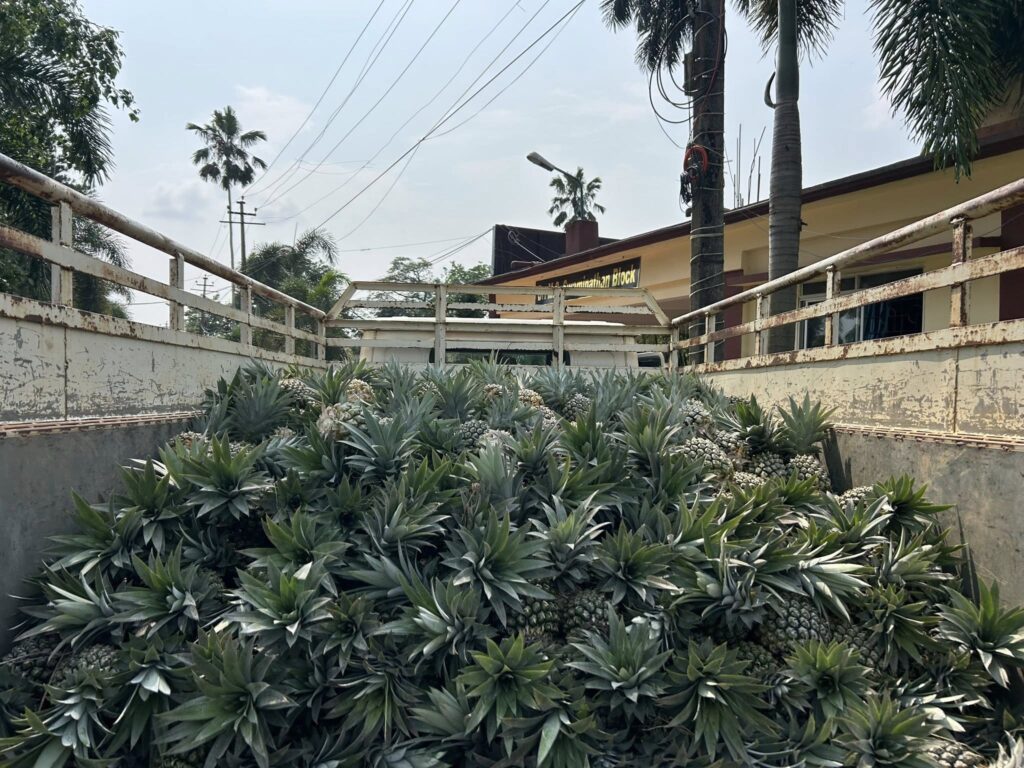
Among these commodities, Bird’s Eye chili, ginger, turmeric, and pineapples have emerged as some of the most sought-after products in domestic and international markets. The state government is working to capitalize on this demand by increasing production capacity and strengthening supply chains.
To further support marketing and processing infrastructure, the government has undertaken a Rs 234 crore project with assistance from the Ministry of Development of North Eastern Region (DoNER). The project aims to enhance processing facilities, improve logistics, and create better market access for farmers across the state.
Despite having limited cultivable land, Tripura has made considerable progress in organic agriculture. Nath credited the success to the dedication of farmers, the support of Farmer Producer Organizations, and the coordinated efforts of the Agriculture Department.
“Farmers are cultivating with commitment, while FPOs and the department are working together to expand organic production and marketing opportunities,” he said.
| Also Read: Tripura CM Addresses Public Grievances Through Samipeshu Programme |
Looking ahead, the Minister announced that Tripura will observe International Pineapple Day in New Delhi on June 27. The event is expected to showcase the state’s flagship fruit and promote its unique qualities among consumers, traders, and investors from across the country.
The review meeting was attended by Agriculture Secretary Apurba Roy, Tripura Organic Mission Mission Director Rajib Debbarma, senior officials of the Agriculture Department, and representatives of various farmer organizations. Their participation underscored the government’s determination to accelerate organic farming initiatives and establish Tripura as a leading organic agriculture hub in Northeast India.
| Also Read: Tripura Targets Mango Self-Sufficiency with Exotic Varieties |
With rising demand, expanding market access, and increasing institutional support, Tripura’s organic farming sector appears poised for sustained growth, offering new opportunities for farmers while strengthening the state’s agricultural economy.





