


Tripura unveils its Clean Energy Roadmap 2035, UTSA green skilling programme and TREAT scheme, targeting 500 MW renewable capacity by 2030 while creating green jobs, expanding solar power, modernising Agartala’s grid and preparing youth and women for the clean-energy transition.
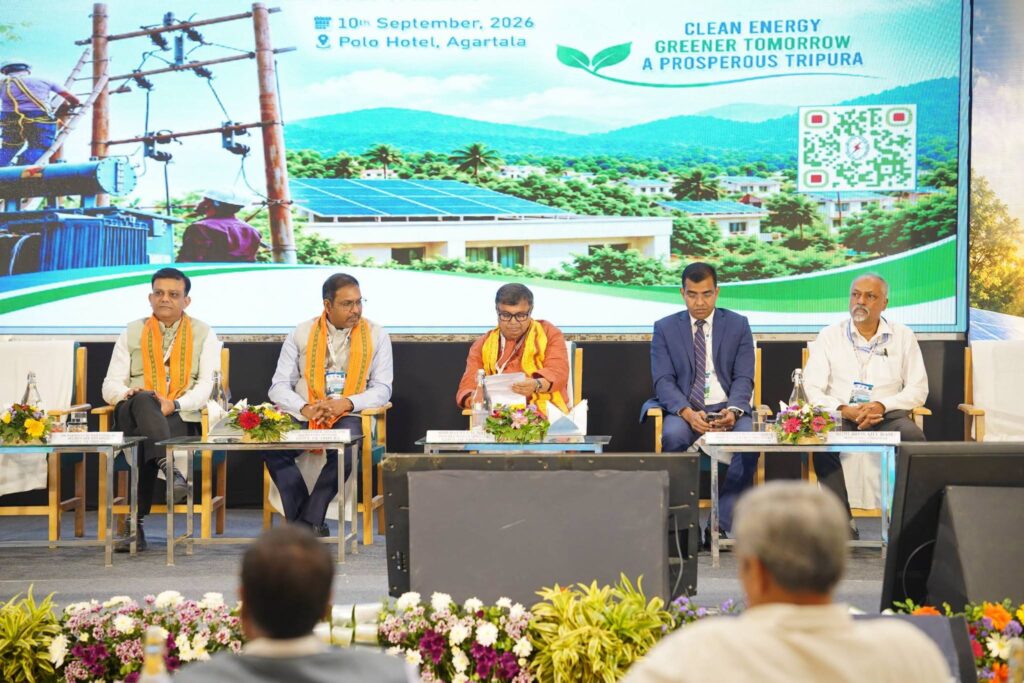
Tripura has unveiled an ambitious clean-energy strategy aimed at accelerating renewable energy development, strengthening power infrastructure and preparing a skilled workforce for the state’s emerging green economy. The state formally launched the Tripura Clean Energy Roadmap 2035, the Green Skilling Programme ‘Unnayan’ (UTSA) and the Transforming Renewable Energy Acceleration in Tripura (TREAT) scheme at an event held at Hotel Polo Towers in Agartala on Thursday.
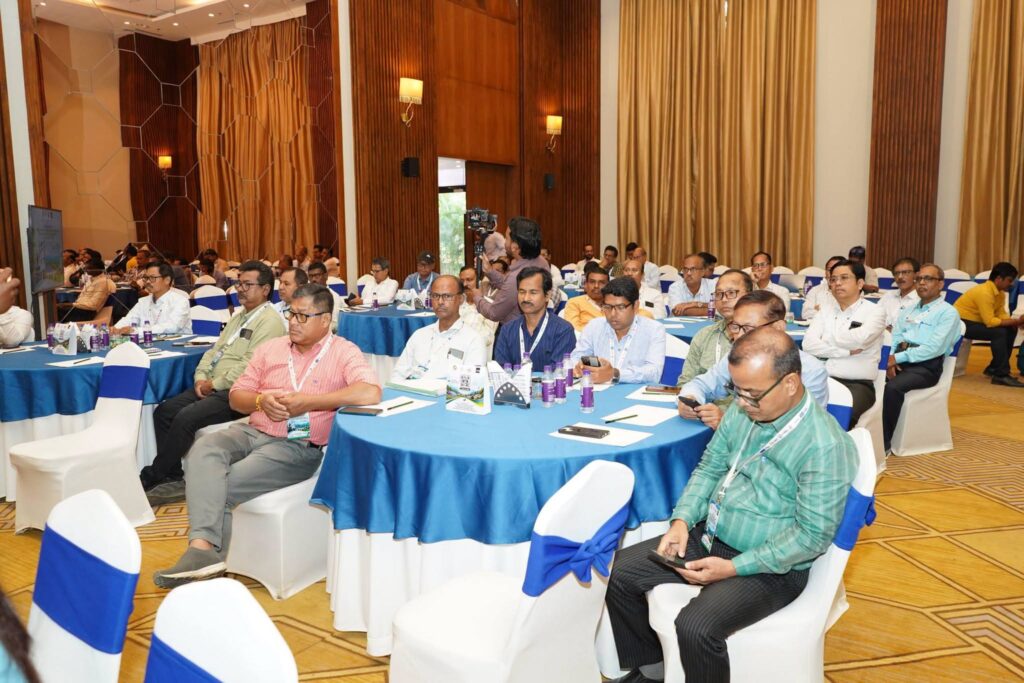
The launch brought together senior officials of the state government, representatives of the Asian Development Bank (ADB), REC and other stakeholders involved in Tripura’s power and renewable-energy sectors. The initiatives are intended to provide a long-term framework for clean-energy expansion while ensuring that local youth, women, farmers and entrepreneurs benefit from the transition.
Power Minister Ratan Lal Nath emphasized that reliable electricity remains fundamental to the state’s overall development and said the expansion of renewable energy must go hand in hand with workforce development.
“You cannot develop this state without power. Industry needs power, hospitals need power, education needs power—everything requires power,” Nath said, stressing that the growing renewable-energy sector will require a large pool of trained technicians and professionals.
According to the minister, more than 1,000 people will receive training under the new green-skilling initiative. The beneficiaries will include ITI graduates, Class XII pass-outs, members of self-help groups, diploma engineers and technicians. The objective is to ensure that Tripura has adequate human resources to install, operate and maintain the expanding solar-energy infrastructure.
Nath particularly highlighted the Unnayan through Transformative Solar Applications (UTSA) programme, which has been designed to create skilled manpower for Tripura’s rapidly developing solar sector. The programme is being implemented by the Tripura Renewable Energy Development Agency (TREDA) in collaboration with the Tripura Rural Livelihood Mission (TRLM) and the Tripura State Electricity Corporation Limited (TSECL).
Training courses under the programme will include Suryamitra and Solar PV Technician programmes, supported by the Ministry of New and Renewable Energy and aligned with ADB-supported clean-energy projects.
The minister pointed out that installing solar panels alone would not be sufficient to ensure the long-term success of renewable-energy projects. “It’s not enough to just install solar panels—who will service them? Who will handle the maintenance?” he asked, underlining the importance of creating a technically capable workforce.
Tripura has set an ambitious target of achieving 500 MW of renewable-energy capacity by 2030. The state currently has around 58.76 MW of renewable-energy capacity, and the government plans to significantly expand generation through solar, hydro and other clean-energy technologies.
Under the PM-KUSUM scheme, Tripura has already installed 9,401 solar pumps, while another 1,709 pumps are under implementation. Together, these initiatives are expected to support nearly 18,802 acres of farmland, strengthening the use of renewable energy in agriculture.
The solarisation of 1,341 grid-connected agricultural pumps is another major step in the state’s clean-energy transition. The installations are generating around 4.40 million units of electricity annually, resulting in savings of approximately Rs 76.65 lakh. The initiative is also enabling farmers to participate in the clean-energy economy by becoming producers of renewable power.
The state has additionally expanded solar micro-grid infrastructure. Under PM-DevINE, solar micro-grids have reached nearly 9,762 families, while 1,703 households have benefited under PM-JANMAN. These initiatives are particularly significant for extending reliable and clean electricity to communities that face infrastructure challenges.
Tripura’s progress in renewable energy has also received recognition at the national level. The Prime Minister highlighted the state’s renewable-energy achievements during the Mann Ki Baat programme. Tripura was also recognised as the Best Performing State among the North Eastern States for installing the highest number of solar pumps under PM-KUSUM. In addition, the state received the SKOCH Power & Energy Silver Award 2025 for its 2.09 MW solar micro-grid project.
The government is simultaneously focusing on modernising the state’s electricity distribution infrastructure. Nath announced that the entire power distribution network within the Agartala Municipal Corporation area will gradually be shifted underground at an estimated cost of more than Rs 1,500 crore.
The tenders for the project have been finalised and work orders have already been issued. The work is scheduled to begin after the elections, following a Bhumi Puja to be attended by Chief Minister Dr. Manik Saha.
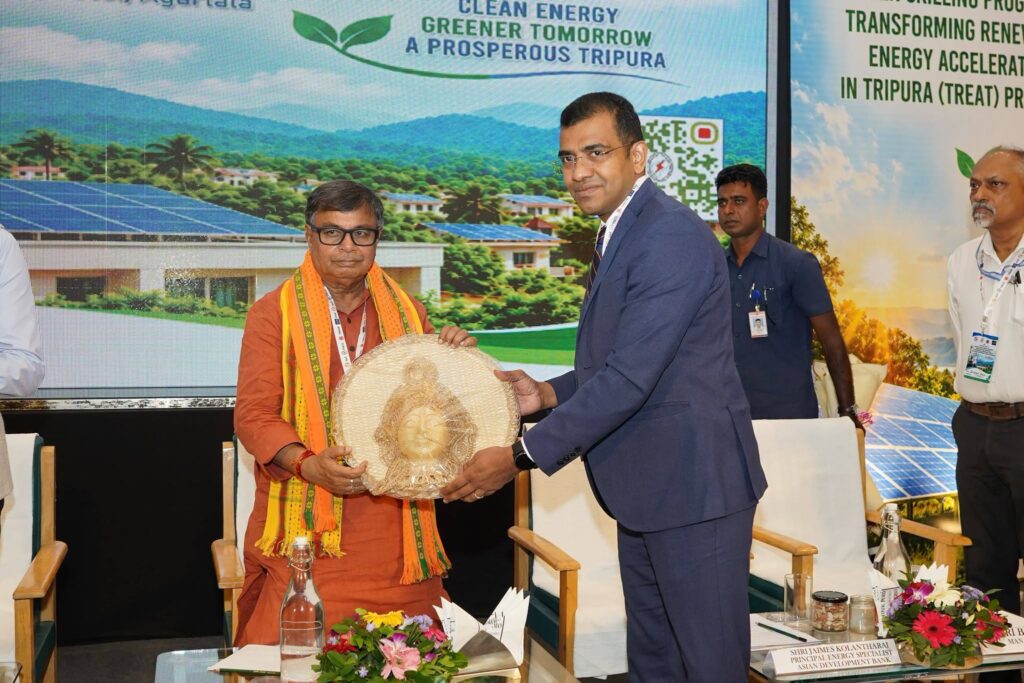
ADB Principal Energy Specialist James Kolantharaj said the Clean Energy Roadmap 2035 would serve as a practical blueprint for renewable-energy development, energy security and the creation of green employment opportunities in Tripura.
He stressed that the clean-energy transition should remain people-centric and generate opportunities for communities, young people, women, farmers and entrepreneurs. According to him, the transition to renewable energy can simultaneously strengthen energy security and create new avenues for employment and economic activity.
TSECL Managing Director Biswajit Basu outlined the growing electricity requirements of Tripura. He said the state’s present power demand stands at around 380 MW, while approximately 190 MW is being exported to Bangladesh. Demand is projected to rise to 520 MW by 2030 and 800 MW by 2035, highlighting the need for substantial investment in generation, transmission and distribution infrastructure.
Basu said the state is preparing several new clean-energy initiatives, including expansion of rooftop solar power, battery energy-storage systems, rehabilitation of hydropower projects, floating solar installations and hydrokinetic projects. Plans also include an 800 MW hydro pumped-storage project and exploration of opportunities in green hydrogen.
The state is also moving towards transforming Agartala’s electricity distribution system into a smart grid. The proposed modernisation will involve underground cabling, GIS-based substations, SCADA integration and optical-fibre communication systems. The transformation is expected to improve monitoring, reliability and efficiency while reducing vulnerabilities in the distribution network.
The Green Skilling Programme ‘Unnayan’ will remain a key component of this broader transition. The programme will focus particularly on empowering youth and women through training in transformative solar applications. Participants will receive certification from a Government of India-accredited agency, helping them access employment opportunities in the growing renewable-energy sector.
| Also Read: Tripura may explore rubber-based revenue measures to strengthen state finances |
The event was attended by Abhishek Singh, IAS, Secretary (Power); Prashant Kumar Goyal, IAS, Secretary (Finance); Tarit Kanti Chakma, IAS, CEO of Tripura Rural Livelihood Mission; Biswajit Basu, Managing Director of TSECL; James Kolantharaj, Principal Energy Specialist, ADB, and other senior officials and stakeholders.
During the programme, three companies associated with PM-SGMBY and PM-KUSUM were also felicitated for their contributions to renewable-energy development in Tripura.
| Also Read: Poor NH condition in Unakoti leaves commuters struggling through potholes |
With the Clean Energy Roadmap 2035, UTSA green-skilling programme and TREAT scheme, the state government has sought to combine renewable-energy expansion with infrastructure modernisation and employment generation. The focus on skilled manpower, solar agriculture, smart-grid technology and emerging clean-energy sectors is expected to play a significant role in shaping Tripura’s energy landscape over the coming decade.





