


Discover how North Tripura DM Chandni Chandran champions rural women’s empowerment as SHG Didis master Chittaranjan Looms at Jubarajnagar’s Juri Textile Unit, driving sustainable livelihoods, handloom heritage, and self-reliant enterprise through Tripura Rural Livelihood Mission skill development training.
In a major step toward women-led economic self-reliance, District Magistrate & Collector of North Tripura, Chandni Chandran, visited the Juri Textile Unit at Jubarajnagar to review comprehensive handloom skill development programmes being conducted for local Self-Help Group (SHG) members, fondly known as SHG Didis.
The initiative, implemented in direct collaboration with the Tripura Rural Livelihood Mission (TRLM), provides rigorous practical instruction on Chittaranjan Looms. Guided by experienced Master Trainers, the training equips rural women with the technical mastery needed to operate semi-automatic handlooms, manage yarn tension, execute intricate patterns, and maintain structural fabric density to meet modern market benchmarks.
During her visit, Chandran spent time observing the weaving floor and directly interacting with the trainees. She commended their determination and emphasized that technical skill development serves as the foundation of authentic social and economic liberation.
The District Magistrate noted that rural women transitioning from basic household labour into skilled artisans represent the backbone of inclusive community development. By mastering Chittaranjan Looms—known for higher productivity compared to traditional pit or frame looms—these women can significantly scale output, cut production lead times, and capture higher profit margins for their households.
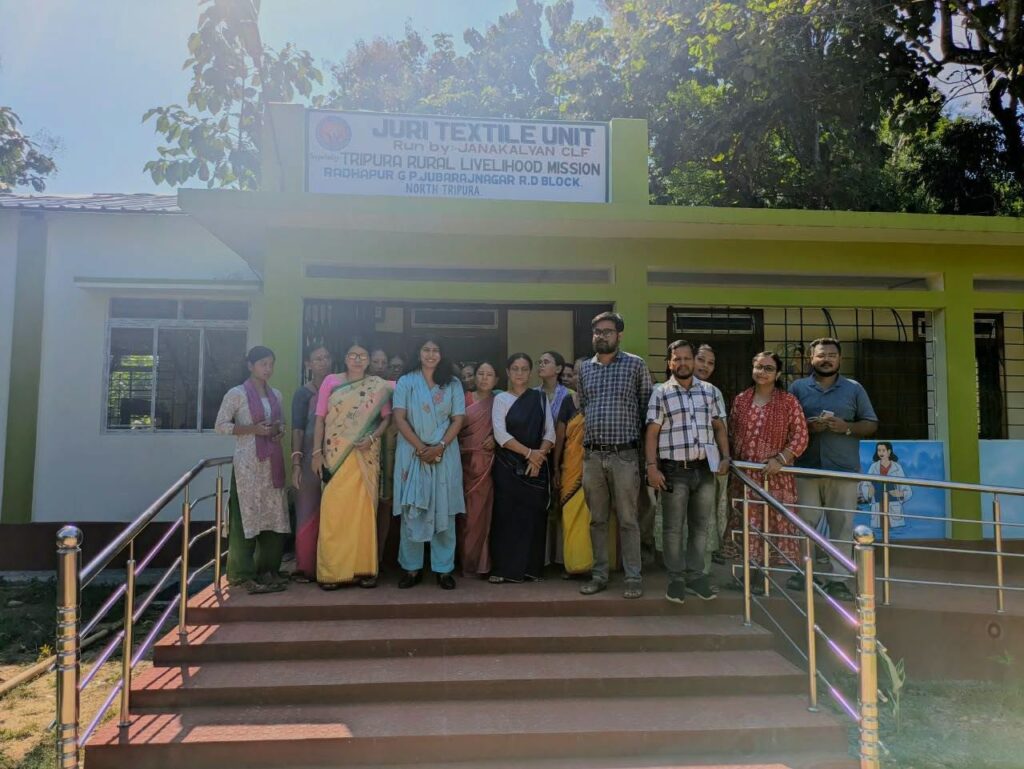
TRLM officials and handloom experts on site outlined the comprehensive scope of the project. Beyond operating machinery, the training integrates end-to-end industry literacy:
Raw material procurement and grading
Quality assurance, warp preparation, and modern finishing methods
Commercial market linkage, pricing strategies, and supply chain readiness
Preservation of indigenous design motifs blended with contemporary consumer preferences
Community leaders and local residents have welcomed the project as a transformative development milestone for the Jubarajnagar block. For decades, traditional weaving in the region remained largely fragmented and constrained by limited market access and slow production equipment. With institutional backing from TRLM and the direct oversight of the district administration, participants are shifting from unorganized cottage work into structured producer collectives capable of supplying state emporiums, exhibitions, and independent retail channels.
| Also Read: Tripura MP Biplab Deb secures PMNRF medical aid for youth |
Officials underscored that this initiative is part of an overarching district vision to revive Tripura’s celebrated textile heritage while building sustainable, decentralized manufacturing clusters. As these SHG Didis gain confidence at the loom, the Jubarajnagar facility is emerging as an active hub of entrepreneurship—proving that targeted skill development, paired with public infrastructure, offers a repeatable framework for rural poverty alleviation and sustainable women’s empowerment across the state.





