The Centre has relaxed Protected Area Permit requirements for foreign tourists visiting Nagaland from November 26 to December 15 annually. The decision aims to promote tourism and support development projects while retaining prior approval requirements for certain foreign nationals.
The Union Ministry of Home Affairs (MHA) has relaxed the Protected Area Permit (PAP) requirements for foreign tourists visiting Nagaland for a period of 20 days every year, from November 26 to December 15, in a move expected to boost international tourism and facilitate foreign visitors to the northeastern state.
According to officials, the decision was communicated through directions issued by the MHA’s Foreigners-I Division. A senior official of the Nagaland Home Department confirmed that the PAP requirement would remain relaxed for foreign nationals visiting the state for tourism purposes during the specified 20-day period every year.
The relaxation is also expected to facilitate the movement of foreign nationals associated with certain ongoing development projects in Nagaland. Officials stated that designated foreign nationals involved in these projects may receive Protected Area Permits with extended validity corresponding to the stipulated project duration and remaining valid alongside their visa.
The permits may also be issued before the arrival of these foreign nationals in India to ensure smoother travel arrangements and support the implementation of development projects in the state.
However, the MHA has maintained certain restrictions. Citizens of Afghanistan, China and Pakistan, along with foreign nationals having their origins in these countries, will continue to require prior approval from the Ministry of Home Affairs before visiting Nagaland.
The latest relaxation comes amid growing demands from the Nagaland government and various sections of society for a review of the Protected Area Permit regime.
Recently, the Nagaland Legislative Assembly unanimously adopted a government resolution urging the Centre to urgently review and withdraw the PAP regime currently applicable to the state and restore the earlier relaxation.
The resolution was moved by Deputy Chief Minister Yanthungo Patton, who also holds the Home and Border Affairs portfolios, during the ninth session of the 14th Nagaland Legislative Assembly.
While supporting the resolution, the House highlighted Nagaland’s peaceful environment and its increasing potential in tourism, cultural exchange, investment, entrepreneurship and international engagement.
The Assembly also observed that tourism, alongside the service and creative sectors, has emerged as an important source of employment and livelihood, particularly for young people. It further noted that civil society organisations, tribal bodies, tourism stakeholders and entrepreneurs have repeatedly called for the withdrawal or relaxation of the PAP restrictions.
The Protected Area Permit system, implemented under the Foreigners (Protected Areas) Order, 1958, regulates the entry and movement of foreign nationals in designated regions, including Nagaland, Manipur and Mizoram.
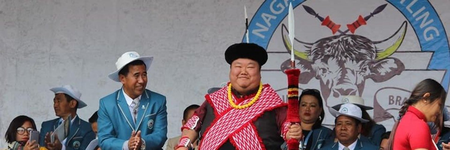
The Centre’s decision is particularly significant as Nagaland is preparing to host the 27th edition of the Hornbill Festival, one of the Northeast’s most prominent cultural celebrations.
The 10-day festival will be organised from December 1 to 10 at the Naga Heritage Village in Kisama, approximately 12 kilometres south of Kohima. The celebration also coincides with Nagaland’s Statehood Day on December 1.
| Also Read: Tamil Nadu CM Raises Monsoon Relief to Rs 7,000 for Salt… |
This year’s festival is expected to attract a large number of domestic and international visitors, with participation from several foreign countries and one northeastern state joining as the Partner State.
The Hornbill Festival showcases the diverse traditions, cultural heritage, music, dance, handicrafts and cuisine of Nagaland’s various tribal communities.
The annual relaxation of PAP requirements is expected to make travel arrangements easier for international tourists attending the festival while strengthening Nagaland’s efforts to promote itself as an attractive destination for cultural tourism and international engagement.